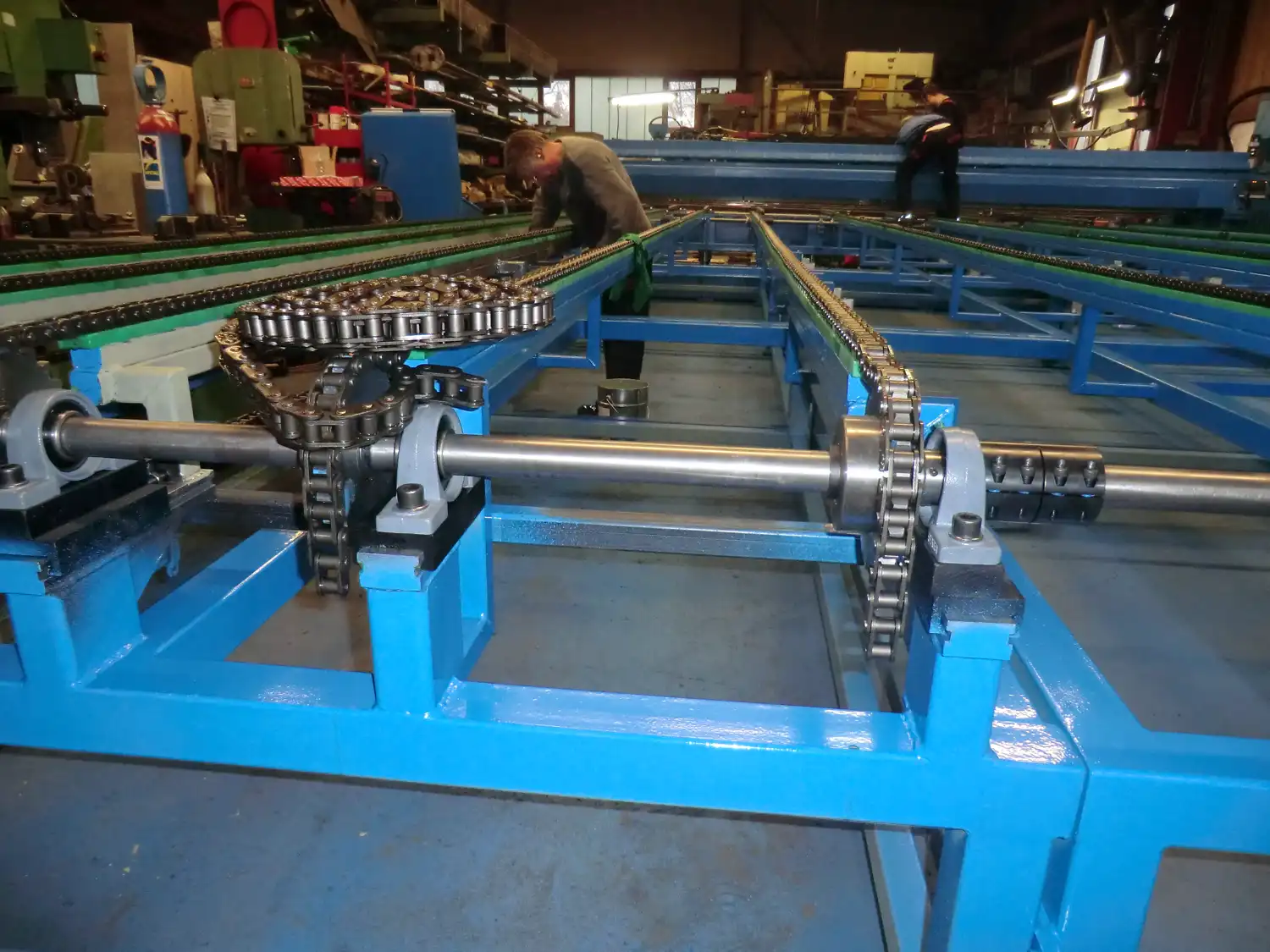
Overview of industry solutions
Individual welding solutions for different manufacturing requirements

Expertise in all welding processes
Container construction
Whether pressure vessels, tanks or industrial hollow bodies — our machines enable process-reliable welds along defined paths and deliver reproducible quality, even with large component diameters.
Which machines are suitable for vessel construction?
Shipbuilding
In shipbuilding, sheets are often assembled to form large structures. Our butt seam systems with conveyor technology and seam tracking ensure precise, continuous connections — even with changing tolerances.
Which machines are suitable for shipbuilding?
Sheet Metal Construction
For applications such as housings, control cabinets or frames, we offer compact welding systems with a consistent seam pattern — tailored to material thickness, geometry and repetition rate.
Which machines are suitable for sheet metal construction?
3D welding parts
When robotic axes alone are not enough, our 3D sewing machines combine component and torch movement. This results in clean, low-tension seams — even with non-standard shapes.
Where are 3D welded components used?
Metal carrier
For beams and profiles, our systems offer reliable solutions for producing stable, continuous welded connections. Whether guided lengthwise or in segmented sections — precise positioning and reproducible seam quality are paramount.
Which machines are suitable for structural steelwork?
Round tubes
For pipes and cylindrical components, the rotating guide ensures clean, even seams — lengthwise or circumferentially. Our systems ensure process-reliable connections and consistent quality even with changing component diameters.
Which machines are suitable for round tubes?
The right welding machine for your challenge
Do you have a component that needs to be welded reliably and automatically? We develop machines that are precisely tailored to your application — process-reliable, economical and manufacturer-independent.
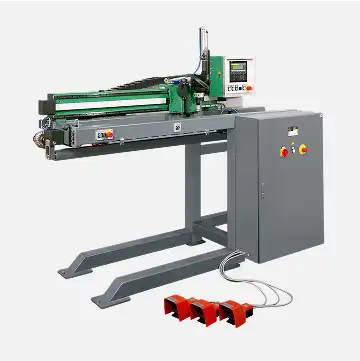
Longitudinal seam welding machines
For linear welds on cylindrical or conical components. Variants for containers, pipes and special geometries.

Circular seam welding machines
For welding closed round seams — axially constructed or rotated. For containers, chimneys and pipe systems.
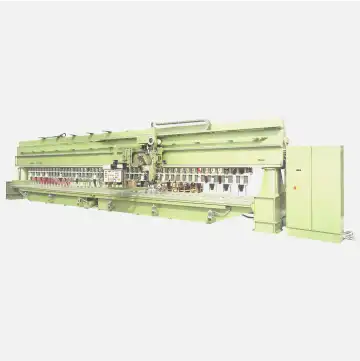
Butt/fillet weld machine
Straight seam for rectangular welded sheets. Ideal for simple geometries and high stability requirements.

Corner seam welding machines
For exact corner designs, e.g. on housings, drawers or covers — precise, stable, repeatable.
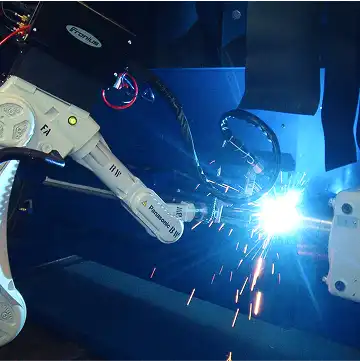
3D seam welding machines
For complex workpieces with multiple spatial axes — a combination of robotics, turning and linear technology.
Solutions independent of welding equipment manufacturers
We support you in developing a tailor-made machine solution — regardless of the welding process, focused on your processes.