Reproducible, stable and in line with requirements
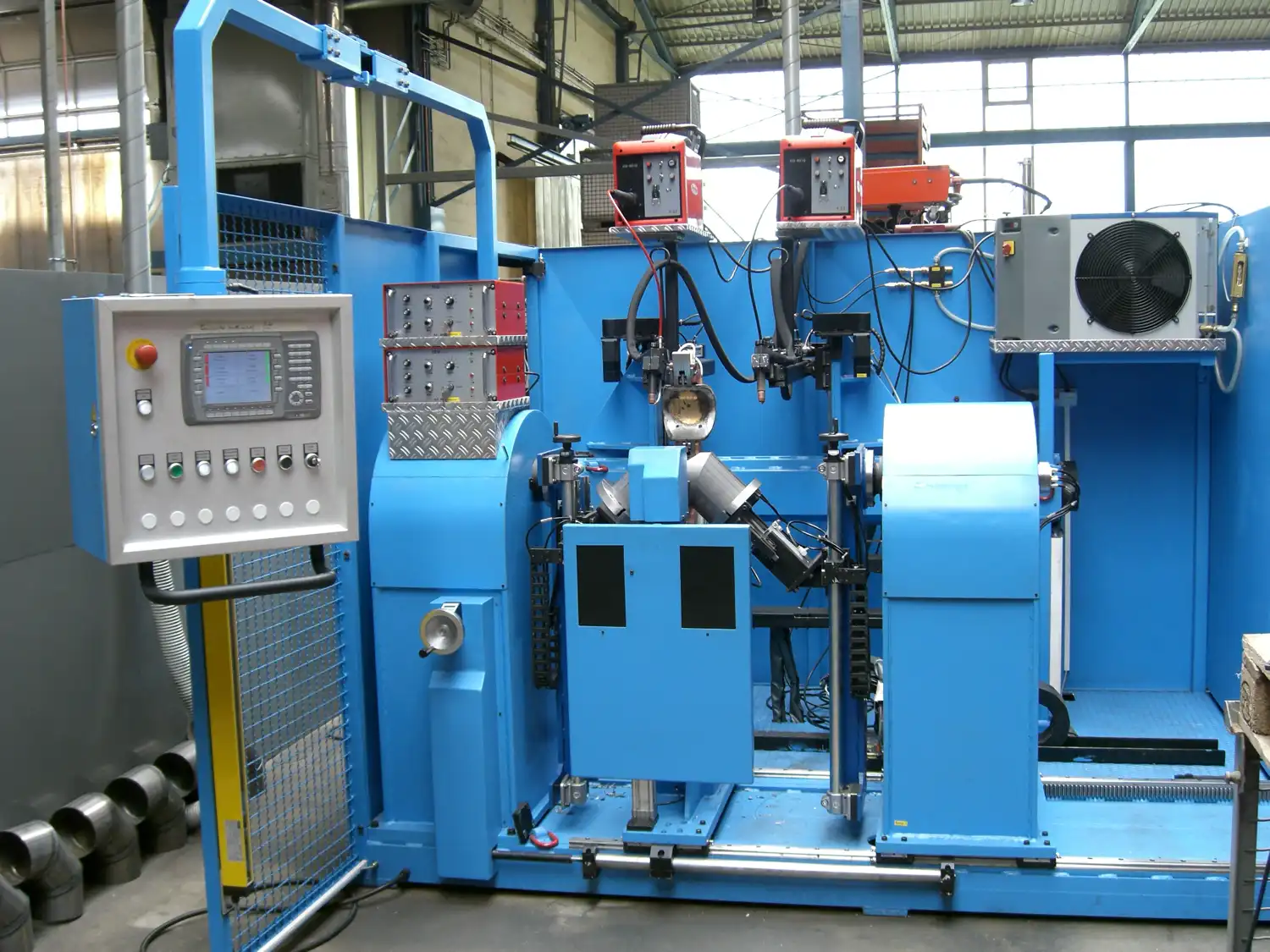
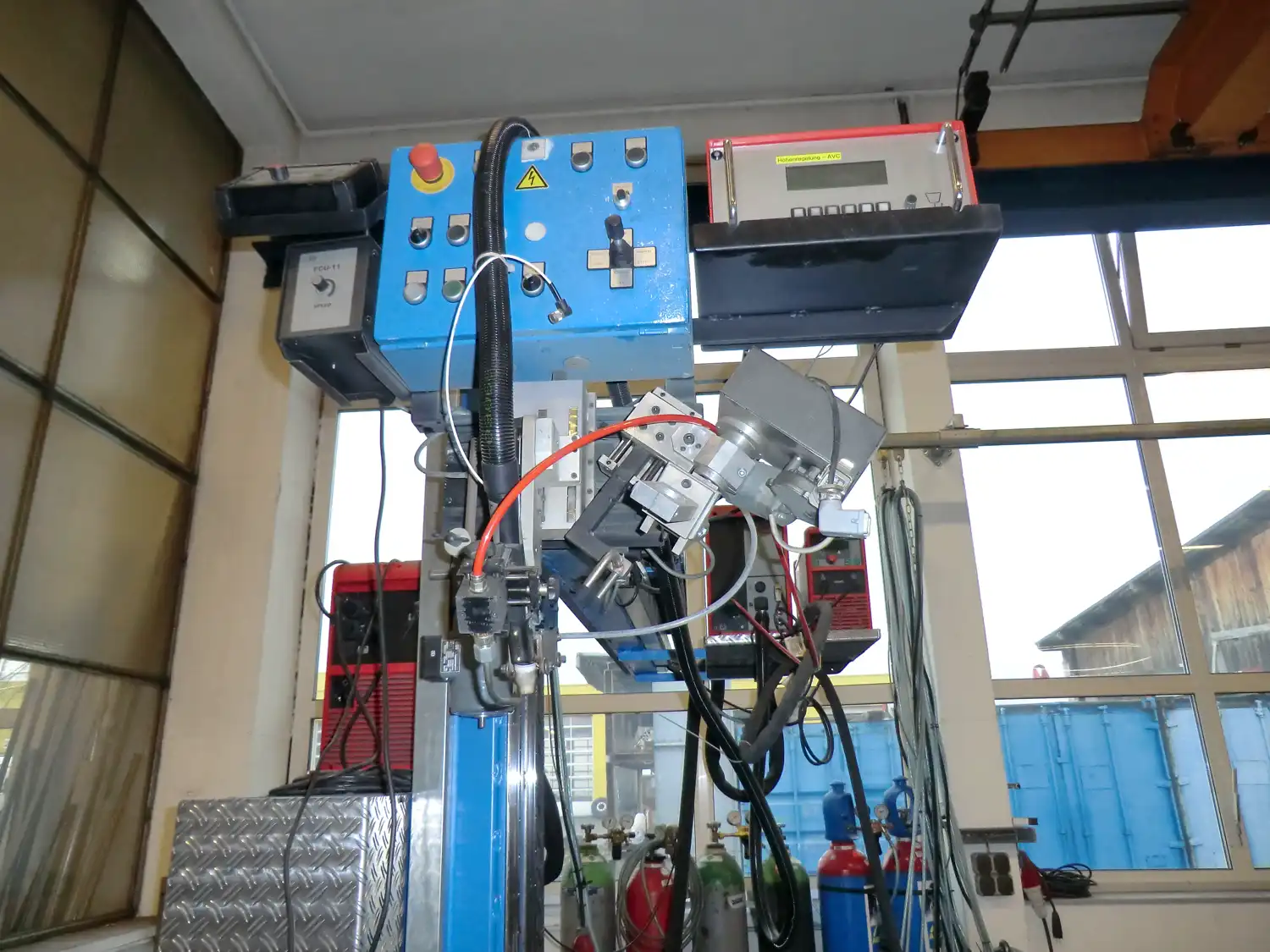
Longitudinal seam welding machines from Klumpp Welding are used to produce straight welds along the longitudinal axis of sheets or rotationally symmetrical components. The machines precisely guide the welding head and enable stable, repeatable processes.
Suitable clamping and positioning devices are available for different requirements, which securely fix the component and align it to the defined seam length. The welding machine and process are selected on a customer-specific basis.
Longitudinal seam technology forms the basis for various types of machines. The longitudinal seam is often used as part of a multi-stage manufacturing process, for example in container construction in combination with circular seam processes.
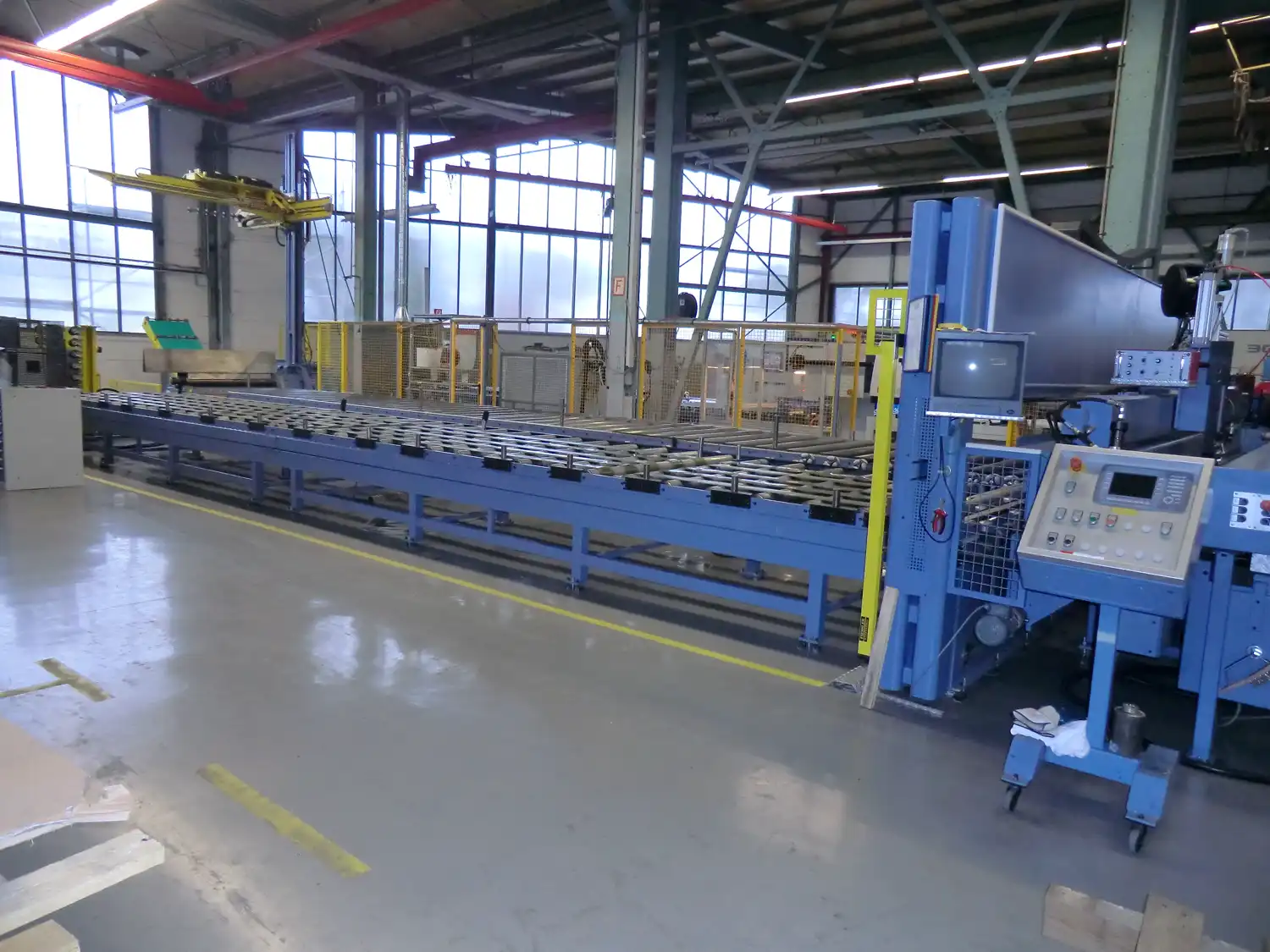
We flexibly adapt our basic models of longitudinal seam welding machines to individual customer requirements. We have virtually no limits when it comes to the length, height and width of the workpieces.
The mandrel is optionally available in a rotatable version. In this way, several rails can be opened at the same time and used one after the other by simply turning them on, so that different materials can be welded without complex retooling. In addition, the front clamping area can be designed as a separate mechanism to clamp independently of the main clamping system.
Longitudinal seam welding machine
-1400px.avif)
-1400px.avif)
-1400px.avif)
-1400px.avif)
-1500px.avif)
Longitudinal Seam Welding Machine with Lift Table
-1400px.avif)
-1400px.avif)
-1400px.avif)
-1400px.avif)
-1400px.avif)
Longitudinal seam welding machine with mechanical presser
-1400px.avif)
.avif)
-1400px.avif)
-1400px.avif)
-1400px.avif)
Roof forming machine
-1400px.avif)
-1400px.avif)
-1400px.avif)
-1400px.avif)
-1400px.avif)
Longitudinal seam welding machine for top component guidance
-1400px.avif)
-1400px.avif)
-1400px.avif)
-1400px.avif)
-1400px.avif)
Longitudinal seam welding machine with swivel function
-1400px.avif)
-1400px.avif)
-1400px.avif)
-1500px.avif)
-.avif)
Combined Longitudinal and Circular Seam Welding System
-1400px.avif)
-1400px.avif)
-1400px.avif)
-1400px.avif)
-1400px.avif)
Details on Longitudinal Seam Welding Machines
When is a Longitudinal Seam Welding Machine Used?
The welding head – regardless of the chosen welding process – is guided precisely along the previously clamped sheet edges, automatically joining the components. Seam preparation is usually carried out upstream, while subsequent processing steps such as grinding or pressing the seam are performed separately. Klumpp Welding offers custom-designed longitudinal seam welding machines for this purpose.
Your Advantages with a Longitudinal Seam Welding Machine
The Right Clamping Technology for Your Application
For greater material thicknesses or higher distortion, hydraulic or high-pressure hydraulic clamping is generally used to ensure stable and positive-locking fixation.
The quality of the upstream rounding process is also crucial: The more precisely the component is pre-formed, the lower the required clamping force. In such cases, a pneumatic solution may also be sufficient even for thicker materials.
Precise and Positive-Locking Clamping of Components
Secure Clamping with Flexible Locking Technology
FAQs
The workpiece length can be flexibly designed. Existing systems enable welding lengths of up to 16 meters.
Components with diameters of up to 20 meters have already been manufactured. The design is project-specific.
Automation is possible. For example, automatic unloading of the machine can be integrated. With the roof panel drawing machine, automated bending of parts on the machine is also possible. Furthermore, Klumpp Welding can integrate the feeding technology for the components and the positioning of the parts to be welded into the process.
All common welding processes can be integrated. The selection is customer-specific and depends on the material, seam requirements, and quality standard.
The mandrel can be moved linearly or tilted via hydraulic or pneumatic cylinders. This allows the machine to be adapted to different workpiece diameters and installation situations.
Generally, all weldable materials can be processed. The welding process used and the weld seam quality depend on the chosen welding machine and the respective process requirements.
Depending on the application, material thicknesses from approximately 0.3 mm to 30 mm are achievable. The exact configuration depends on the material and welding process.
Welding is possible on both the inside and outside of the container. The execution depends on the component size, accessibility, and quality requirements.
Discover our circular seam welding machines for rotationally symmetrical components and closed container geometries — precise, automated and application-oriented.
Does your production need an integrated welding solution?
We support you in developing a tailor-made machine solution — regardless of the welding process, focused on your processes.